
Summary
California Governor Gavin Newsom, ending his 8 years in office and eyeing a presidential run, faces pressure at home to respond to public concerns about artificial intelligence and data centers. But he can’t afford to upset his billionaire backers whose dollars will be crucial to his presidential campaign. He signed a series of bills designed to provide a few protections that already seem outdated and ineffectual. The alarm over AI’s immensely dangerous capabilities is growing in California and elsewhere to a fever pitch and encompasses concerns far beyond the reach of measures approved by Newsom or agreed to by the CEOs Trump recently called to the white house.
Analysis
Facing growing public concern over data centers and the other excesses of his billionaire tech backers, California Governor Gavin Newsom signed a set of bills that, in his words, were “ the most comprehensive data center protections in America”. Two of the bills require the California Public Utilities Commission to create a rate structure and tariffs that ensure data centers pay their fair share of costs to the electric grid and protect residential customers from cost-shifting, a process that will likely take years and that the industry will surely have a huge voice in. Other bills require water usage and other resource drains to be disclosed, and prevent data centers from being awarded environmental review exemptions.
These protections are unlikely to quiet the concerns being felt around the state, where cities and counties are quickly moving to ban or pause any data center development, including in Newsom’s Bay Area home turf. Data center moratoriums are being considered in Oakland, San Francisco, and Hayward and have already been passed in neighboring Oakley, Gilroy, and Richmond. Other cities are also taking action, and some states might take issue with Newsom’s characterization of his package of bills as ‘the most comprehensive’ on data centers. New York and Virginia have halted or paused some data center approvals, and other states are also considering bans and moratoriums.
Protecting children is not controversial, at least not in the ways three bills signed by Newsom do it. ‘Adam’s Law’ named after a 16 year old Californian who died by suicide after lengthy interactions with a chatbot, requires chatbot operators to determine a user’s age, offer usage reminders and disclosures, and make default settings that only a parent can change available. Another law targeting social media companies will prohibit sites from providing users under age 16 with algorithmic feeds, autoplay, infinite scroll, and other “addictive features.” Once you’re 17, you’re fair game for the rest of your life. Shouldn’t these platforms contain, at the very least, warnings that they are designed to be addictive?
The Governor’s press release on signing a regulatory legislation, Senate Bill 813, bragged that it was “establishing first-in-the-nation standards for third-party audits and independent assessments of AI systems.” It calls for a state agency that will promulgate voluntary standards for third-party evaluations of artificial intelligence to “help ensure that the technology remains safe and beneficial.” In other words, the bill targets not the companies themselves but rather the non-binding evaluation standards to be recommended. A companion bill by Assemblymember Rebecca Bauer-Kahan will establish an official state registry for independent AI auditors by January 1, 2029, and provide ethical, independence, and transparency standards for auditors.
Nothing in either bill aroused the ire- or lobbying muscle- of the AI billionaires. In fact, Anthropic endorsed the bills as did rival OpenAI. The CEOs of both companies have responded to public ire about AI by acknowledging the threat it poses, making vague suggestions about a ‘slow down’ that stop short of saying they will do so and agreeing on the need for “regulations” such as the ones signed into law by Newsom, i.e. voluntary ones that they help create.
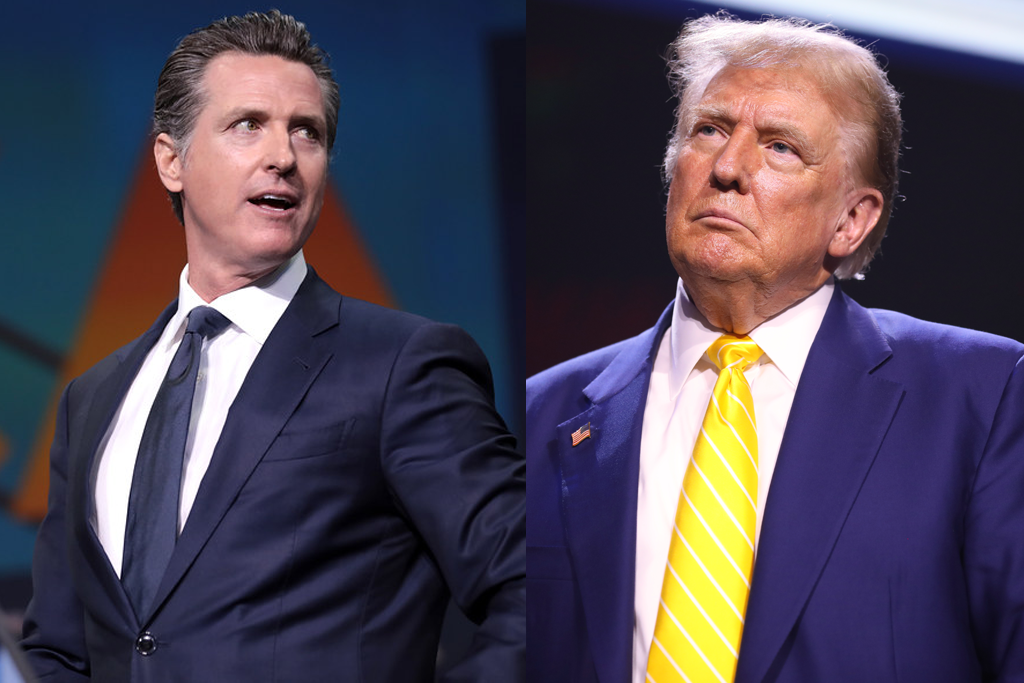
In fact, Newsom and Trump don’t look all that far apart on tech issues. Trump himself, while insisting that data centers are not harmful and AI is not the threat its own makers are saying it is, called a group of CEOs to the white house to address public concern. The attendees, billionaire sycophants of Trump including Mark Zuckerberg (Meta), Sundar Pichai (Google), Jeff Bezos (Amazon), Dario Amodei (Anthropic) and Alex Karp (Palantir) all kindly agreed to police themselves. Attendees signed a voluntary agreement to adopt safety regulations that include risk reviews, auditing and evaluations of systems by third parties. Showing once again their craven fealty toward Trump, they apparently also agreed to adopt Trump’s “super intelligence” rebranding.
With that, and doomsday warnings in the media every day, the Governor may need to do more to avoid being cast as in the pocket of tech billionaires. He has hinted at a special legislative session on AI before his term ends, which could be a way for him to take full advantage of the media attention his office can attract one last time before he leaves.
Engagement Resources:
The Alliance for Secure AI, a nonprofit organization that educates the public about the implications of advanced AI. https://secureainow.org/action-center/trump-xi-letter/
The ALGORITHMIC ACCOUNTABILITY TOOLKIT, A guide to uncovering and challenging state automation, https://www.amnesty.org/en/latest/research/2025/12/algorithmic-accountability-toolkit/