
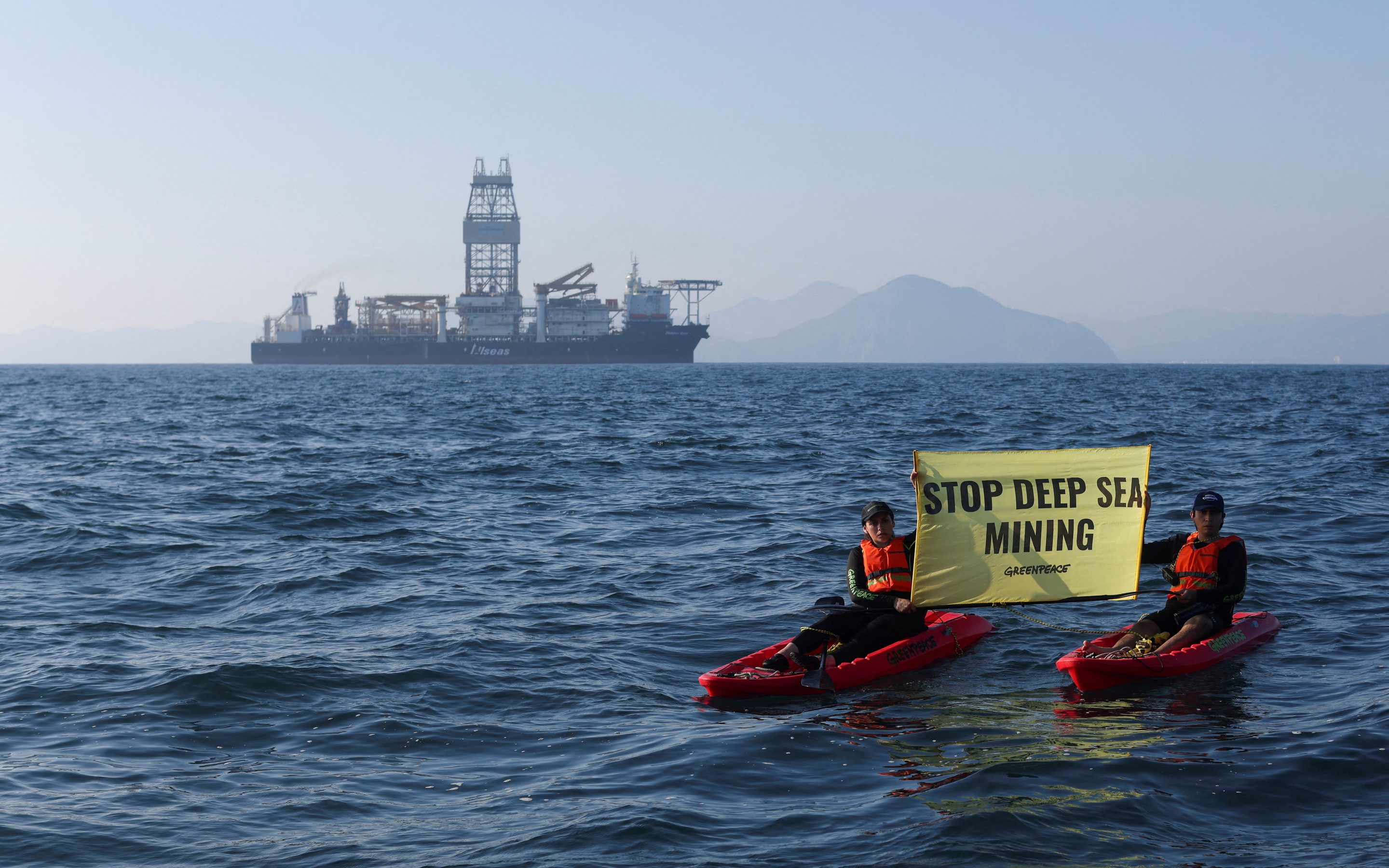
In keeping with the administration’s bull-in-a-China-shop approach to the environment, foreign policy, tariffs, and just about every other domestic and international issue, the Trump team now wants to dig up the bottom of the sea.
Though it might sound more like a dystopian science fiction film premise— enormous machines crawling across the seafloor, scooping up mineral-rich rocks, sending clouds of sediment drifting for miles, smothering deep-sea life, changing water chemistry, leaving deep trench-like scars on the seabed that remain visible decades— this could be reality with the Trump administration’s new seabed mining initiative.
In late April 2025, the president signed a directive telling federal agencies to “unleash” America’s offshore mineral resources. The bold language calls for the relevant US government apparatus to take an active lead in deep-sea exploration and encourage private companies to get into the game.
Trump’s seabed mining EO tells NOAA to get permits moving faster, pushes the Interior Department to map offshore areas where valuable metals might be found, an extreme break with the current international agreements governing exploitation of the sea bed in international waters.
The idea is familiar, and in keeping with Trump‘s single-minded pursuit of the building blocks of our modern technological economy— minerals needed for batteries, electronics, and the defense industry, which are often processed in China.
Trump’s seabed mining EO defies established convention, acting unilaterally despite long-standing international agreements protecting the seabed from commercial exploitation until fully fleshed-out guidelines can be agreed upon by the international community.
From the administration’s point of view, waiting for years of international negotiation is too slow, so the United States should act first. That includes the possibility of approving mining in waters outside the US’s EEZ (exclusive economic zone).
Not surprisingly, alarms went off around the world.
Foreign governments, scientists, and ocean advocates reacted immediately. China warned that no nation should treat the deep seabed as its own property. The International Seabed Authority — the body that oversees activity in international waters — said American permits issued outside its system could undermine decades of work.
Environmental groups went further. Many see the policy as a reckless push to open a barely understood ecosystem to industrial extraction. They point to research showing how long damage can last.
One of the sharpest criticisms came from Earthjustice, which called the policy “a life raft for an untested, opaque industry that science is telling us poses enormous threats to ocean ecosystems for little gain.”
Private mining companies have taken notice. A Canadian firm, The Metals Company, has already begun discussions with U.S. officials about exploiting a swath of the Pacific, a move that drew intensive protests from island nations, environmental groups, and deep-sea ocean life researchers.
What are the rules in place, and how does Trump’s EO circumvent those protections?
The current international system for decades has held that the deep seabed beyond national borders be treated as a shared trust — the “common heritage of mankind.”
International rules were created through the U.N. Convention on the Law of the Sea, which established the International Seabed Authority.
That body has issued exploration licenses, but it has never approved commercial mining. Final rules for full-scale operations are still being negotiated.
Today, dozens of countries and many corporations support a moratorium or pause until more science is done. They argue the risks are too great, and recovery is too slow.
Deep-sea animals are slow-growing, fragile, and often found nowhere else on Earth. If we scrape them away, the wounds may outlast us.
Engagement Resources
- Earthjustice quote and press release: https://earthjustice.org/press/2025/earthjustice-statement-on-trump-administrations-deep-seabed-mining-executive-order
- Reuters: China reaction https://www.reuters.com/markets/commodities/china-urges-us-follow-international-law-reported-deep-sea-metals-stockpile-plan-2025-04-14/
- International Seabed Authority statement https://isa.org.jm/news/statement-on-the-us-executive-order-unleashing-americas-offshore-critical-minerals-and-resources/
- CSIS analysis of mining politics https://www.csis.org/analysis/trumps-deep-sea-mining-executive-order-race-critical-minerals-enters-uncharted-waters