
Policy Issue Summary
The July 2023 military takeover in Niger, led by General Abdourahamane Tchiani and the National Council for the Safeguard of the Homeland (CNSP), marked a significant setback for democratic governance in the Sahel. However, the removal of President Mohamed Bazoum must be viewed not merely as an isolated authoritarian power grab, but as a catalyst for a profound geopolitical realignment. In the two years since the coup, the CNSP has systematically dismantled long-standing security frameworks, resulting in the expulsion of French forces in late 2023 and the complete withdrawal of United States military personnel and the closure of key drone bases by September 2024.
Concurrently, Niger has pivoted toward a new model of regional autonomy. In September 2023, Niger joined Mali and Burkina Faso to form the Alliance of Sahel States (AES), a pact designed to prioritize mutual defense and internal sovereignty over traditional Western partnerships. This shift culminated in the three nations’ formal exit from the Economic Community of West African States (ECOWAS) in January 2025. While the rejection of democratic norms and the shift away from ECOWAS are concerning, they signal a deep-seated frustration with the status quo. The region remains volatile, but these developments underscore the urgent need to understand why long-standing US and Western engagement failed to secure stability or win the hearts and minds of the Nigerien people.
Analysis
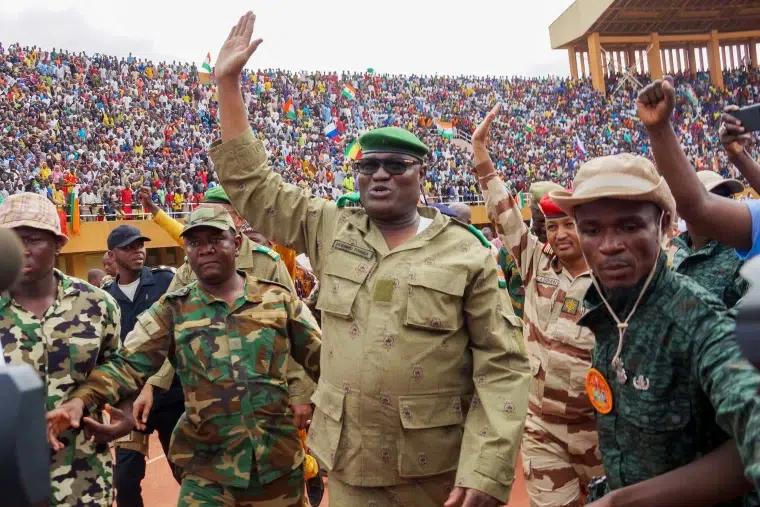
The events in Niger serve as a critical wake-up call for Western policymakers. Popular support for the CNSP suggests that the previous democratic arrangement was failing to deliver tangible benefits to the average citizen. For decades, Niger has been integrated into Western economic and security architectures—most notably through uranium exports to France—yet its population remains among the poorest in the world. The CNSP’s recent moves to reclaim control over mining assets, including the revocation of Orano’s operating licenses, resonate with a public that perceives a disconnect between their country’s resource wealth and their own economic reality.
From a US security perspective, the loss of Air Base 201 in Agadez, among other military bases in the region, is a strategic failure that demands introspection. The United States invested millions (possibly billions) of dollars into these installations to project power and counter terrorism. Yet, despite this massive expenditure of tax dollars and a decade of operations, violent extremism in the Sahel metastasized rather than receded.
This creates a painful paradox: The US presence was viewed by many locals not as a partnership for development, but as a militarized occupation that offered little in the way of economic uplift. By prioritizing a “security-first” approach over holistic economic development and governance, US policy inadvertently created a vacuum that the military junta has filled with populist rhetoric and new alliances.
The Niger junta’s pivot toward Russia—evidenced by the arrival of military instructors and agreements for nuclear energy cooperation—is a direct challenge to American influence. However, dismissing this merely as “malign Russian influence” ignores the agency of African nations. Niger is seeking partners who they believe will offer better terms or more immediate security results. The failure of the “War on Terror” model in the Sahel suggests that without addressing root causes like poverty and lack of opportunity, military assistance alone is insufficient to sustain a democracy.
The lesson is clear: Democracy cannot just be a slogan; it must deliver results. The pivot in Niger is not simply anti-West, but a rejection of a policy framework that failed to improve the lives of Nigeriens. If the United States and France wish to champion democracy and counter the influence of authoritarian rivals like Russia, they must offer a value proposition that goes beyond drone bases and security assistance. Future engagement must respect Nigerien sovereignty while offering genuine economic partnerships that benefit the population, proving that democracy is the most viable path to prosperity.
Engagement Resources
- Tricontinental: Institute for Social Research (https://thetricontinental.org/): A global research institute that produces dossiers and analysis on the Sahel’s struggle for sovereignty, offering a perspective grounded in the needs of the working class and the Global South.
- Peoples Dispatch (https://peoplesdispatch.org/): A media project providing extensive coverage of the Alliance of Sahel States, offering on-the-ground reporting that counters mainstream Western narratives regarding the coups in West Africa.
- Black Agenda Report (https://www.blackagendareport.com/): A news and analysis outlet that consistently critiques US imperialism in Africa, providing detailed commentary on the role of AFRICOM and the political economy of the Sahel.
- Pan-Africanism Today (https://panafricantoday.com/): A secretariat coordinating solidarity with African struggles, which has organized conferences and webinars connecting the movements in Niger, Mali, and Burkina Faso with broader anti-imperialist networks.
- Urgences Panafricanistes (https://urpan-official.com/): An NGO led by Kemi Seba that campaigns against the CFA franc and French neocolonialism, playing a significant role in the civil society mobilization that supported the expulsion of foreign troops.