
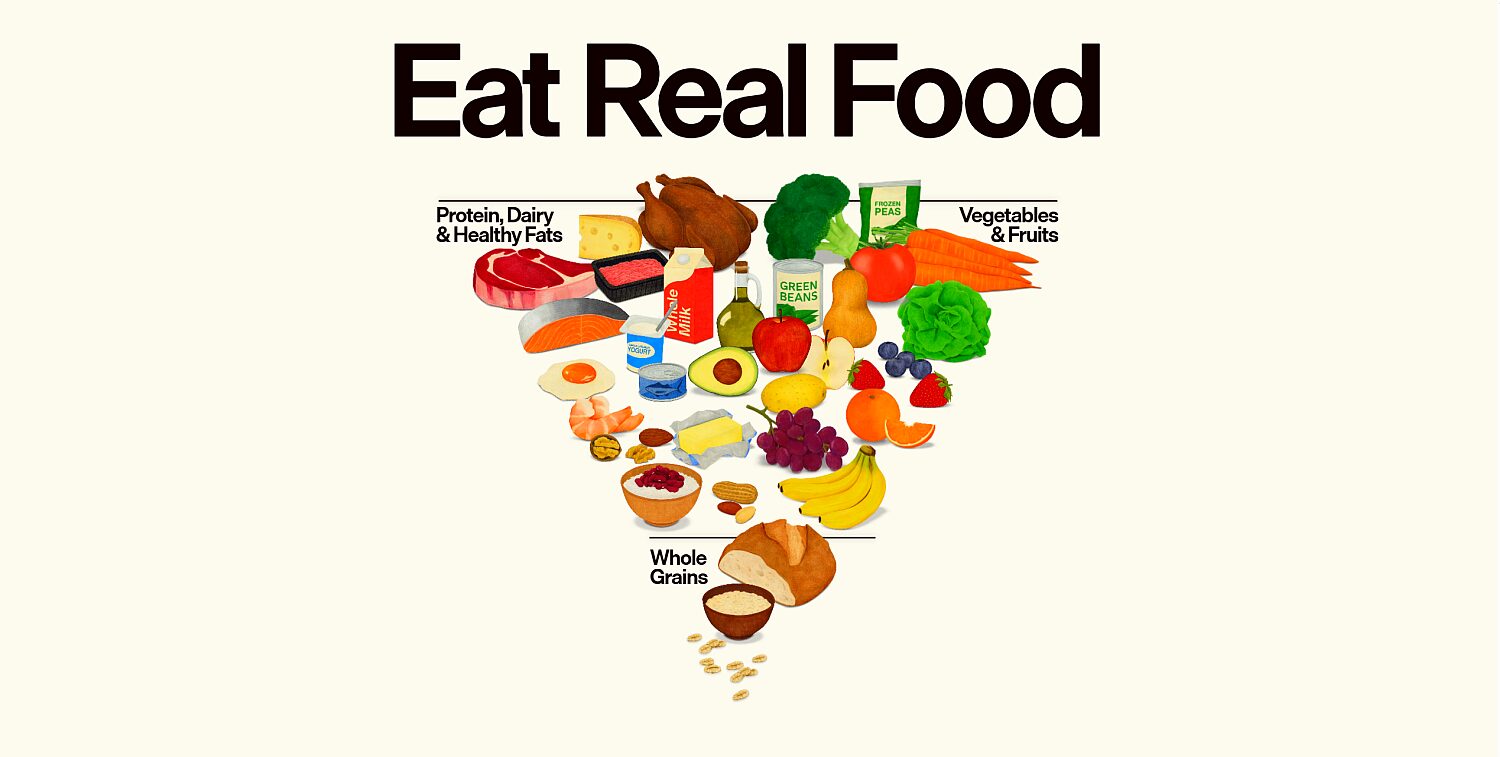
On January 7, 2026, the U.S. federal government released the 2025–2030 Dietary Guidelines for Americans. These new guidelines show a shift in how U.S. health officials define healthy eating andaddress processed foods, protein consumption and dairy. The Guidelines were issued by the Department of Health and Human Services (HHS) and the Department of Agriculture (USDA). They are set to shape federal nutrition policy, school meal standards and how public health is messaged for the next five years.
The guidance targets packaged, ready-to-eat foods high with sugar, sodium, refined carbohydrates and additives, citing chips, candy, sugary drinks and frozen meals as examples. What is commonly knownas “ultra-processed foods,” the federal government is now calling “highly processed foods.” Federal officials warn the foods are contributing to obesity and obesity-related diseases, including Type 2 diabetes and heart disease.
The recommendations call for a diet centered on whole, nutrient-dense foods such as fruits and vegetables, as well as whole grains, healthy fats and protein. Unlike previous versions, the new recommendations explicitly include meat and full-fat dairy when eaten in moderation. Federal officials have described the shift as a move away from rigid low-fat frameworks toward a broader focus on eating minimally processed foods. Added sugars remain a major concern. The guidelines recommendlimiting added sugars to less than 10% of daily calories and state that no amount of added sugar is necessary for good health, particularly for children. Sodium intake limits remain in place, and saturated fat is still recommended to stay below 10% of daily calories, even as the guidance allows more flexibility around whole-food sources of fat.
The rollout has sparked political debate and skepticism beyond the nutrition and health community.This reflects a broader mistrust of federal health guidance and of the Trump administration.
Some conservatives and food industry groups have questioned whether the administration isoverreaching by discouraging processed foods that are affordable and widely consumed. They warn that the recommendations could raise food costs or further stigmatize foods relied on by low-income families. Others on the right have criticized the guidelines as inconsistent, arguing they promote meat and dairy while continuing to caution against saturated fat. The American Action Forum, a center-right economics and health research institute, argued that broad warnings against categories ofprocessed foods could be overly simplistic and cause confusion about affordable food options, callingfor clearer definitions and careful consideration of economic impact. Sen. Roger Marshall of Kansas called the update “a huge win for America,” saying food is “the best medicine known to man,” while
Sen. Tommy Tuberville thanked officials for highlighting “real, healthy food” under the Make America Healthy Again agenda.
On the left, environmental and public health advocates have raised concerns about the expanded emphasis on animal products, particularly red meat and full-fat dairy, citing climate impacts and long-standing links to cardiovascular risk. Critics have also questioned why the final document diverged from recommendations made by the Dietary Guidelines Advisory Committee, saying the process appears more political than scientific. The American Heart Association welcomed the focus on cutting added sugar and highly processed foods but emphasized that elevating red meat and full-fat dairy risks undermining long-standing guidance on saturated fat and cardiovascular disease. The Center for Biological Diversity criticized the emphasis on animal products as politically driven and said it ignores the climate and ecological costs of meat production.
The response from Democratic lawmakers has been limited. Sen. Cory Booker of New Jersey, who has long focused on food policy and nutrition, has previously raised concerns about meat-heavy diets,citing links to chronic disease and environmental impact. Beyond Booker, reaction from prominent Democratic lawmakers has been notably quiet.
Public reaction has also been divided. On platforms including X, Reddit and TikTok, supporters havewelcomed simpler messaging around “real food” and cutting back on sugar. Others have expressed confusion over what qualifies as processed and whether the update reflects new science or a rebranding of previous administrations’ advice. Marion Nestle, a longtime nutrition professor at New YorkUniversity, has previously warned that broad and inconsistent use of the term “processed foods” can confuse consumers and undermine confidence in dietary guidance. Recent polls from the Harvard T.H. Chan School of Public Health and the de Beaumont Foundation and the Annenberg Public Policy Center show declining trust in federal health agencies.
These changes appear to read less like a new change and more like rebranding of long standing federal advice. The refurbished focus on whole foods and limiting added sugars is aligned with previous guidance. What does stand out is the emphasis on red meat and full fat dairy. This is interesting to see since decades of previous messaging noted the link between saturated fats cardiovascular issues. Even for meat eaters, there have been eyebrows raised about how this advice contradicts heart health research. It feels like a rebrand with ambiguous and slightly questionable additions.
The emphasis on red meat and full-fat dairy in particular feels like the strangest addition. While the guidelines stress moderation, the messaging blurs the line between decades of public health efforts. For consumers who struggle to interpret nutrition advice, this shift might confuse protein intake with adapting healthy eating patterns that cardiologists have long urged people to start.
Administration officials have pushed back against criticism, describing the guidelines as a reset rather than an ideological statement. They say the changes are intended to address rising rates of obesity and chronic disease and that the focus on nutrient density and reducing highly processed foods reflects current evidence and is meant to be flexible.
Health and Human Services Secretary Robert F. Kennedy Jr. has defended the guidelines as a public health reset. At a White House event announcing the update, Kennedy said the message was simple:“Eat real food.” In a CBS News interview, he emphasized protein intake and said the administration is encouraging people to eat more meat, dairy and other high-quality protein sources.
The dietary guidelines are now in effect and will shape federal nutrition policy, school meals and public health messaging for the next five years.
Sources: U.S. Department of Health and Human Services and U.S. Department of Agriculture (https://www.dietaryguidelines.gov); Associated Press (https://apnews.com); CBS News (https://www.cbsnews.com); Harvard T.H. Chan School of Public Health and the de Beaumont Foundation (https://www.hsph.harvard.edu; https://debeaumont.org).