
Policy Issue Summary
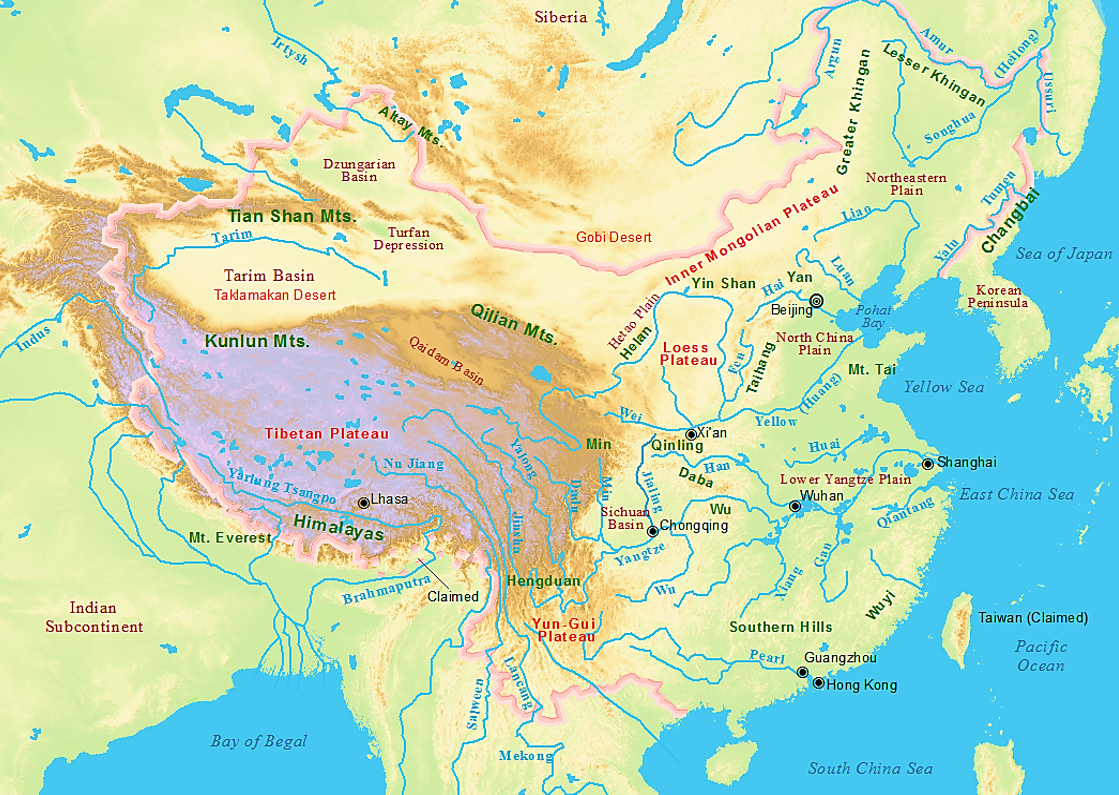
China serves as the definitive geographic and demographic anchor of the East, a vast landmass of approximately 3.7 million square miles that shares borders with fourteen nations. This physical reality dictates much of its internal policy and external posture. From the high-altitude Tibetan Plateau to the fertile floodplains of the Yangtze and Yellow Rivers, the country is divided by the Heihe-Tengchong Line, an imaginary boundary that reveals a stark reality: roughly 94% of the population lives on the eastern side of the line, occupying only 43% of the land. This concentration of humanity has fueled the most rapid urbanization in human history, shifting hundreds of millions of people from agrarian lifestyles to industrial and technological hubs.
The demographic landscape is currently undergoing a historic transformation. After decades of hyper-growth, China is facing a population decline for the fourth consecutive year, with 2025 year-end data released in 2026 showing a total population of approximately 1.4 billion. This shift is accompanied by a rapidly aging workforce and a shrinking birth rate, which fell to record lows despite the transition from the One-Child Policy to a Three-Child Policy. The government is now grappling with the material reality of a silver economy, where the social contract must adapt to support a burgeoning elderly population while maintaining the industrial productivity that lifted over 800 million people out of extreme poverty in recent decades. Understanding these spatial and human constraints is essential for any analysis of China’s role in the global struggle for sustainable development and its resistance to Western-led unipolarity.
Historical context is also essential. Imperial China evolved through a recurring dynastic cycle in which ruling houses claimed the Mandate of Heaven, consolidated territory and bureaucracy, flourished through agricultural expansion, trade, and cultural production, and then weakened under fiscal strain, elite corruption, rebellion, ecological pressure, or foreign invasion. Key predecessors to the Qing included the Shang, Zhou, Qin, Han, Sui, Tang, Song, Yuan, and Ming dynasties, each of which helped define China’s administrative traditions, cultural identity, and territorial imagination.
The Qing must therefore be read as the last chapter of a much longer imperial pattern rather than as an isolated episode. Its immediate predecessor, the Ming, arose after the collapse of Mongol Yuan rule, rebuilt a Han-led agrarian state, strengthened bureaucracy and trade, and sponsored major cultural and maritime projects before being weakened by fiscal crisis, factional conflict, peasant rebellion, and Manchu military pressure. The Manchu Qing seized Beijing in 1644, expanded China’s frontiers, and presided over high imperial prosperity, but nineteenth-century rebellions, unequal treaties, and failed reforms eroded its legitimacy. The 1911 Xinhai Revolution ended the dynasty and created the Republic of China; only after warlord fragmentation, Japanese invasion, and civil war did the Communist victory of 1949 establish the People’s Republic of China.
Analysis
The relationship between China’s geography and its political economy is defined by the struggle to manage uneven development. While the coastal provinces have become the factory of the world, the vast western interior remains a focal point for state-led investment aimed at reducing regional inequality. This geographic disparity is not merely a logistical hurdle but a central concern for the Common Prosperity initiative, which seeks to redistribute wealth and resources away from billionaire-led tech sectors toward rural revitalization. The massive infrastructure projects seen in Xinjiang and Tibet, while often viewed through a lens of Western security concerns, are internally framed as essential integration efforts to connect the periphery to the central economy, ensuring that the benefits of development are not hoarded by the urban elite.
This uneven development also has an ethnic dimension. China officially recognizes 56 ethnic groups: the Han majority and 55 minority nationalities. Among the largest minority groups are the Zhuang, Uyghur, Hui, Miao, Manchu, Yi, Tujia, Tibetan, and Mongol communities, many of whom are concentrated in frontier or autonomous regions that are central to China’s territorial, security, and development strategy. Their voices enter the policy process mainly through state-recognized channels: regional ethnic autonomy, local people’s congresses, the National People’s Congress, and the Chinese People’s Political Consultative Conference. However, this representation operates within a Party-led system, meaning minority interests are formally included but do not function as independent veto points against national policy priorities set by the Communist Party.
This historical arc matters because China’s current geography and demographics are not timeless facts; they are the accumulated result of frontier expansion, agrarian settlement, river-basin statecraft, imperial integration, and revolutionary state-building. The Communist state inherited both the Qing territorial frame and the Republican-era problem of rebuilding sovereignty after imperial collapse, then reorganized population, industry, and infrastructure through socialist planning, land reform, and later market-era development.
Chairman Xi Jinping is therefore central to how these geographic and demographic pressures become policy. Xi holds China’s three most important leadership posts: General Secretary of the Communist Party, President of the People’s Republic of China, and Chairman of the Central Military Commission. His influence is not simply personal; it is institutional. The Party Constitution identifies Xi Jinping Thought as a guiding ideology and calls for the Party to uphold the centralized, unified leadership of the Central Committee with Xi at its core. In practice, this gives Xi dominant agenda-setting power over major national priorities—such as common prosperity, rural revitalization, technological self-reliance, national security, and ethnic unity—while ministries, provincial governments, and consultative bodies operate within the broad policy direction established by the Party center.
Demographically, China is entering a period of post-growth that challenges the capitalist assumption of infinite expansion. The shrinking labor force is driving a shift toward high-tech automation and green development as the state seeks to maintain its standard of living without the population dividend of the 20th century. From a perspective that values labor rights and social welfare, this demographic crunch places immense pressure on the Chinese state to strengthen its social safety nets. The Hukou system—the household registration policy that historically limited migrant workers’ access to social services—is undergoing significant reformto allow the internal migrant proletariat to fully participate in the urban social contract. This is a critical move toward justice for the floating population that built China’s modern cities under precarious conditions.
Furthermore, China’s geography informs its environmental policy, which is perhaps the most critical global issue of our era. As a nation highly vulnerable to climate change, with its most populous cities located on sinking coastal plains and its water security tied to melting Himalayan glaciers, China has pivoted toward becoming a renewable energy superpower. It currently leads the world in solar and wind capacity. This transition is not just a matter of ecology but of sovereignty; by reducing dependence on imported fossil fuels, China mitigates the geographic vulnerability of the Malacca Strait, a maritime chokepoint through which much of its energy flows. To manage the increasing threat of urban flooding, the government has pioneered the Sponge City concept, integrating permeable surfaces and green infrastructure to harmonize urban density with the natural water cycle.
Finally, the demographic shift toward an older population necessitates a move away from the grueling work culture that dominated the previous decade. There is a growing class consciousness among Chinese youth, evidenced by social movements like lying flat and involution, which reject the hyper-competitive pressures of the market. The government’s response to these demographic and social pressures—balancing the need for economic stability with the demands of a new generation for a better quality of life—will determine the stability of the Chinese model. This internal evolution is far more significant to the average Chinese citizen than the geopolitical posturing often highlighted in American media, as it touches on the fundamental right to dignified labor and social security in a changing world.
Having established this physical and human foundation, we can better understand how these forces are channeled through the specific political structures and historical legacies we will explore next month.
Take Action
- Tricontinental: Institute for Social Research: A movement-driven institution that produces high-quality research on the Global South, offering deep dives into China’s poverty alleviation and its role in a multipolar world from a non-Western, anti-imperialist perspective.
- Qiao Collective: A diaspora-led media collective that challenges the New Cold War rhetoric. They provide resources and toolkits for understanding Chinese policy through the lens of anti-imperialism and Global South solidarity.
- Asia for Educators (Columbia University): A historically grounded teaching resource for tracing China’s major dynasties, the Ming-Qing transition, the Republic, and the rise of the Communist state.