
Policy Issue Summary
China’s economic and defense systems are increasingly integrated under a unified strategy of “high-quality development” and “military-civil fusion.” In March 2026, the National People’s Congress formally adopted the 15th Five-Year Plan (2026–2030), which serves as the master blueprint for the nation’s trajectory through the end of the decade. The central pillar of this plan is the cultivation of “New Quality Productive Forces,” a term championed by the leadership to describe a shift away from traditional, labor-intensive manufacturing toward a technology-led economy driven by artificial intelligence, quantum computing, and green energy.
For 2026 specifically, the government established a GDP growth target of 4.5% to 5%; the Five-Year Plan does not establish that same annual target for every year through 2030. The state is prioritizing stability and technological self-reliance while attempting to maintain economic growth and increase domestic consumption. This economic shift is intended to reduce China’s vulnerability to external shocks, including sanctions and trade restrictions, while addressing internal disparities through policies associated with “common prosperity.”
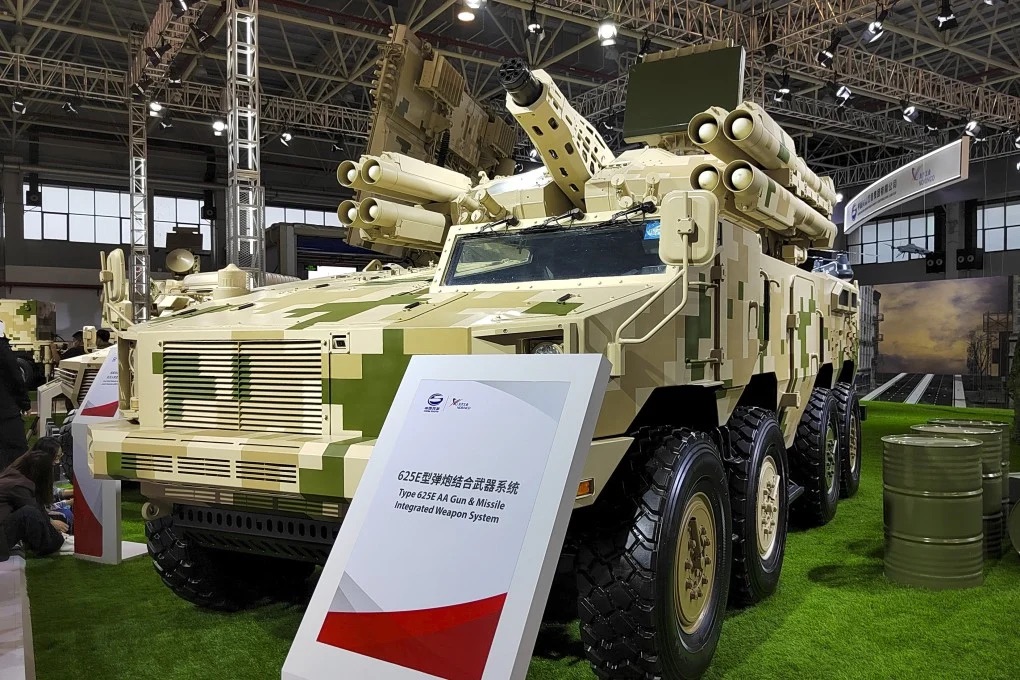
Simultaneously, China’s defense system is undergoing its most significant modernization since the founding of the People’s Republic. The 2026 defense budget has been set at approximately $281 billion, a 7% increase from the previous year, continuing a decade-long trend of disciplined, single-digit growth. This spending is laser-focused on the 2027 centenary goals of the People’s Liberation Army (PLA), which aim to transform the force into a fully “informationized” and “intelligentized” military. The state views its military capacity not as a tool for global hegemony, but as a necessary deterrent against the “containment” policies of the United States and its allies. By integrating cutting-edge civilian technology into its defense apparatus, China seeks to build a “system-of-systems” capable of defending its territorial integrity and maritime interests in a multipolar world.
Analysis
From a perspective that critiques the extraction of wealth by global capital, China’s economic model represents a significant departure from the neoliberal “Washington Consensus.” ( advocates for free-market capitalism, privatization, deregulation, and strict fiscal discipline).
While the West often characterizes China’s state-led economy as a distortion of the market, it is more accurately viewed as a system that subordinates capital to social goals. The 15th Five-Year Plan doubles down on the role of State-Owned Enterprises (SOEs) as the “ballast stone” of the economy, ensuring that critical sectors like telecommunications, energy, and finance remain under public oversight rather than private profit-seeking. This allows the state to direct investment toward rural development and the “green transition” at a scale and speed that market-driven economies cannot match. The massive expansion of the digital yuan in 2026 further illustrates this, as it provides a public-ledger alternative to Western-dominated financial systems, facilitating “RMB internationalization” and reducing the threat of US dollar hegemony.
The concept of “New Quality Productive Forces” is also a direct response to the demographic challenges discussed in our first brief in this series. As the labor force shrinks, the state is utilizing high-tech automation to maintain productivity while attempting to raise the “quality” of employment for the working class. However, this transition is not without its challenges. China produces more goods than its people currently buy. To strengthen demand at home, the government is expanding services for older adults and reforming social welfare. The goal is to rely less on exports, especially as trade tensions with Western countries grow. For the American left, China’s experience suggests that industrial policy can support stable jobs and environmental goals while reducing the risks of fragile global supply chains. It can do this by using public investment and long-term planning to build important industries at home, including clean energy, electric vehicles, batteries, and computer chips. This approach can create jobs, speed up the shift to cleaner energy, and reduce dependence on a small number of foreign suppliers.
China presents its military expansion mainly as a defensive response to pressure near its borders. A key goal is to build Anti-Access/Area Denial (A2/AD) capabilities that could make it harder for foreign forces to operate near the Taiwan Strait and the South China Sea. The United States maintains a large global network of military bases, while most People’s Liberation Army (PLA) forces remain close to China. China is also investing in newer areas such as AI-assisted warfare, unmanned ships, and space technology. These tools are meant to help China offset the larger size and global reach of the U.S. military. This reflects China’s idea of “active defense”: disrupting an opponent’s ability to communicate and coordinate rather than fighting a long war of attrition.
China links its economic and defense policies through what it calls the “right to development.” Its leaders argue that economic gains need military protection from outside pressure, pointing to past cases in which Global South countries were destabilized after asserting greater independence. By 2026, the Military-Civil Fusion strategy remains central to national security, using advances in AI and semiconductors for both civilian growth and national defense. Supporters say this model ties military spending to wider technological and social goals instead of mainly benefiting private defense contractors.
As we have seen how China builds its internal strength, we can now turn our attention to how it projects this power globally and manages its increasingly complex foreign relations.
Take Action
International Institute for Strategic Studies (IISS): A world-leading research institute that provides detailed, data-driven analysis of the Chinese military and the 15th Five-Year Plan, offering a comprehensive look at the PLA’s modernization and global security implications.
The Quincy Institute for Responsible Statecraft: A think tank that advocates for a more restrained US foreign policy, providing research that pushes back against the “China threat” narrative and explores the economic and military realities of a multipolar world from a perspective of diplomacy and peace.