


Multiple Tech Outages in the US
Photo-Illustration: Jobanny Cabrera; Getty Images
Last week saw multiple instances of mass tech infrastructure failure in the United States. On November 13th airlines canceled thousands of flights across the U.S. after the FAA issued an order for the mass grounding of flights, the longest since the 9/11 attacks. On November 16th major banks across the US, JPMorgan Chase, Bank of America, Wells Fargo and other major financial institutions reported service outages, with service only being restored early the next day. On November 17th apple services and Gmail were hit with outages, with users being unable to log-in and access their accounts. Additionally, the same day the classified internal communications network of the National Security Agency, whose mandate includes protecting government communications networks, went offline.
In all cases, government and company officials blamed the outages on technical glitches or interruptions due to repairs, saying there’s no evidence of cyberattacks. Though the string of critical tech infrastructure outages in quick succession has led many speculating as to whether the events are related and being carried out through a coordinated attack.

China APEC Summit
Crowds gather to watch a light show for the Apec summit in Shenzhen. Photograph: Alex Plavevski/EPA
This week China is hosting the Asia-Pacific Economic Cooperation (APEC) summit in Shenzhen, a city at the heart of China’s tech industry. In his opening speech at the summit, Chinese President Xi Jinping stated support for “free and open trade,” while expressing opposition to “protectionism”. APEC currently has 21 member economies and accounts for about 62% of global GDP and roughly half of global trade. APEC operates on non-binding commitments reached strictly by consensus, with commitments undertaken on a voluntary basis. During this year’s summit various deals are set to be made, but the highest profile event is when the leaders of China, Russia and the US are set for high-stakes talks. The talks will target large looming global topics such the Iran and Ukraine wars, with flashpoints such as trade, AI and nuclear weapons also on the agenda.
Ukraine Destroys Part of Russia-Crimea Bridge
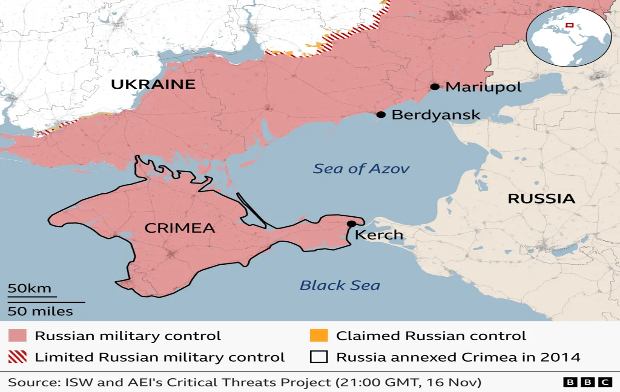
Last week the Ukrainian military destroyed the only bridge linking Russia to Crimea. In Ukraine the bridge is seen as one of the main symbols of Russia’s occupation of Ukrainian lands and had long sought to target the Russia- Crimean Bridge. The bridge provides a road and rail route for Russian soldiers heading towards the front line and until now had been untouchable. After working weeks to knock out Russian air defence systems and radars, with the use of cruise missiles and drones, Ukraine was able to take out part of the bridge.
In a meeting at NATO headquarters US Under Secretary of War for Policy, Elbridge Colby, criticized Ukraine’s strike on the Crimean Bridge, saying it would only prolong and deepen the conflict. Meanwhile, the German defence minister immediately dismissed the statements from the US as “stupid,” with British officials saying the strikes are saving lives. Volodymyr Zelenskyy said the strike on the Russian-built Kerch Bridge linking Crimea to Russia was retaliation for the numerous Russian attacks on Ukrainian bridges, infrastructure and cities.

Five EU Countries Unveil Migrant Deportation Deal with Rwanda
European ministers from five countries pose with Rwanda’s Interior Minister Vincent Biruta for a photo in Vienna, Austria, November 16, 2026 [Leonhard Foeger/Reuters]
Five European countries have unveiled a deal to deport to and hold migrants in Rwanda. The deal will see the establishment of a detention center in Rwanda, the first EU migrant deportation center outside of the bloc. The group comprises Germany, Denmark, Austria, Greece and the Netherlands. The five countries plan to have the center up and running in 2027. The deal has sparked protests from human rights groups, a warning from the United Nations refugee agency UNHCR and Amnesty international calling the deal “disgraceful”.
The proposed scheme claims it would apply only to people in the five countries who are subject to enforceable removal orders, including rejected asylum seekers. According to a joint statement published by the five, those deported “will have the opportunity to integrate into the society of Rwanda”or they could voluntarily return to their home country or travel to another country they can legally enter. The deal follows the continued advance of the far-right and anti-immigrant sentiment across Europe.