
USRESISTNEWSUnderstanding Public Policy and Taking Action

Keeping Democracy Alive

2026 Democratic Primary Preview Series
Profiles of Democratic candidates in 2026 state congressional elections.

Alabama (2026 Democratic Primary Preview Series Brief #1)

Alaska (2026 Democratic Primary Preview Series Brief #2)

Arizona (2026 Democratic Primary Preview Series Brief #3)

Colorado (2026 Democratic Primary Preview Series Brief #6)

Connecticut (2026 Democratic Primary Preview Series Brief #5)

Delaware (2026 Democratic Primary Preview Series Brief #7)

Hawaii (2026 Democratic Primary Preview Series Brief #8)

Iowa (2026 Democratic Primary Preview Series Brief #9)

Kansas (2026 Democratic Primary Preview Series Brief #10)
Kansas has one Democratic member of the house up for re-election Sharice Davids of the 3rd Congressional District.

Idaho (2026 Democratic Primary Preview Series Brief #11)

Indiana (2026 Democratic Primary Preview Series Brief #12)

Louisiana (2026 Democratic Primary Preview Series Brief #13)

Kentucky (2026 Democratic Primary Preview Series Brief #14)

Maine (2026 Democratic Primary Preview Series Brief #15)

Michigan (2026 Democratic Primary Preview Series Brief #16)

Montana (2026 Democratic Primary Preview Series Brief #17)

New Jersey (2026 Democratic Primary Preview Series Brief #18)

New York (2026 Democratic Primary Preview Series Brief #19)

Massachusetts (2026 Democratic Primary Preview Series Brief #20)

Minnesota (2026 Democratic Primary Preview Series Brief #21)

North Dakota (2026 Democratic Primary Preview Series Brief #22)

Oklahoma (2026 Democratic Primary Preview Series Brief #23)

Missouri (2026 Democratic Primary Preview Series Brief #24)
Latest USRESISTNEWS and Analysis

Civil Rights
 Todd Hill
A Preview of Supreme Court June Cases (Civil Rights Policy Brief #253)
Rodney A. Maggay

Why Louisiana v. Callais Is Problematic For The Voting Rights Act (Civil Rights Policy Brief #252)
Rodney A. Maggay
The Problem With DOJ Requesting Voter Roll Information From States (Civil Rights Policy Brief #251)
Rod Maggay
President Trump’s Odd Proposal to “Nationalize” U.S. Elections (Civil Rights Policy Brief #250)
Rodney A. Maggay

An Analysis of the California – Texas Re-Districting Fight (Civil Rights Brief #249)
Rodney Maggay
Can The Government Prosecute Protesters For Their Speech? (Civil Rights Policy Brief #248)
Rodney Maggay
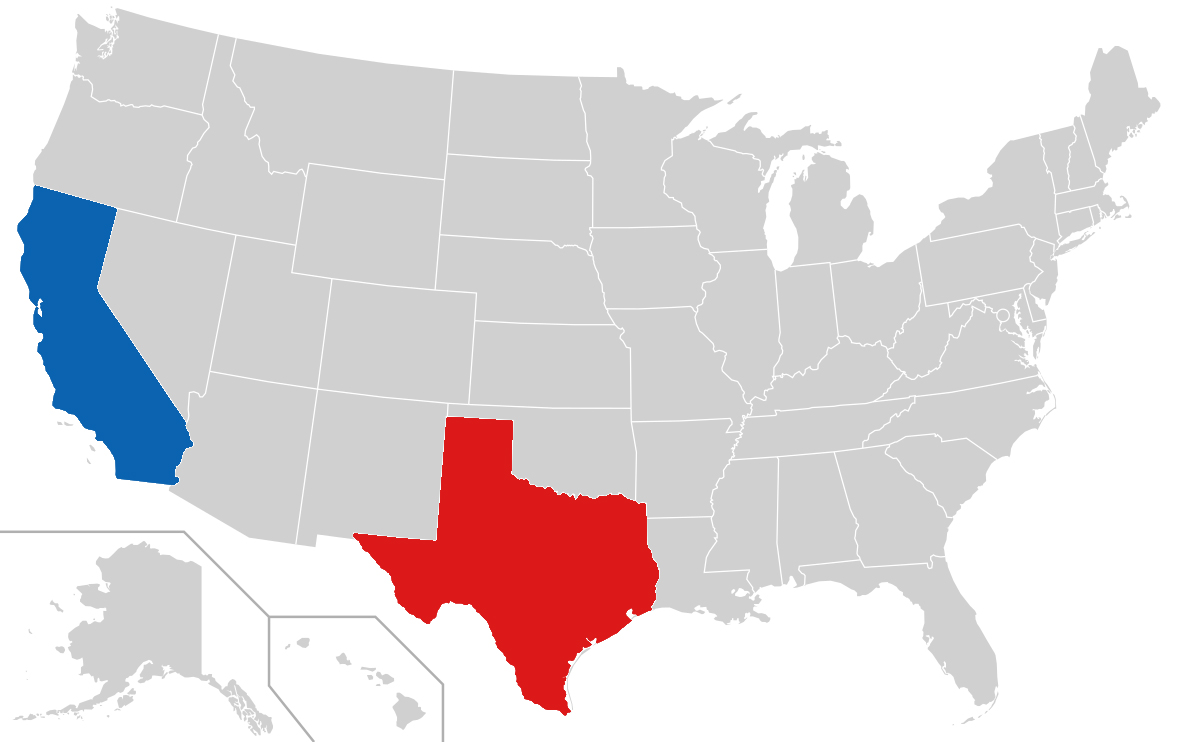
The Texas and California Re – Districting Fight Explained
Rodney A. Maggay

Why The Birthright Citizenship Rule Is Still Valid Today And What Comes Next (Civil Rights Brief #245)
 david
david

The Role of the Judiciary Against The Other Branches of Government – A Historical Background (Civil Rights Policy Brief #244)
Rodney Maggay

The Distinction Between Law and Policy And The Role of The Courts

Elections & Politics
Haley Gabrielle Lloyd

Issues Affecting Democrat Messaging in the Upcoming Midterm Elections (Elections and Politics Brief #204)
Nicholas Gordon

JD Vance Blames the Victims (Elections & Politics Policy Brief #203)
Inijah Quadri
Democracy on the Brink: Structural Suppression and the Fight for the 2026 Midterms (Elections & Politics Brief #202)
Nicholas Gordon

How low will he go? President Trump’s penchant for debasing himself undermines U.S. Credibility (Elections & Politics Brief #201)
Morgan Davidson

Funding Dissent in the Crosshairs: Trump’s War on the Soros Foundations (Elections & Politics Policy Brief #200)
Morgan Davidson

Unmasking the Target: Antifa & Trump’s Crackdown on Dissent (Elections & Politics Brief #199)
Nate Iglehart
The Government Shutdown: Why it Happened, and What May Happen Next (Elections & Politics Brief #198)
Morgan Davidson

The ‘Radical Left’: Defining Dissent in Divided America (Elections & Politics Brief #196)
Nate Iglehart

How To Ensure A Fair And Safe 2026 Midterm Election (Election and Politics #197)
Nate Iglehart

Trump and Intel — A Republican-Backed Nationalization (Elections & Politics Brief #194)

Foreign Policy

Foreign Policy
The Value of NATO—Past, Present, and Future (Foreign Policy Brief #224)
The North Atlantic Treaty Organization, better known as NATO, has been one of the most influential political and military alliances in modern history. Formed in 1949 by 12 countries, NATO has grown into a 32-member alliance across Europe and North America, with Sweden becoming the newest member in March 2024. Its stated purpose is to guarantee the freedom and security of its members through political and military means, especially through the principle of collective defense: under Article 5, an attack against one member is treated as an attack against all.
The Week That Was: Global News in Review (Foreign Policy Brief #232)
Iran has vowed retaliation after a US destroyer fired on an Iranian-flagged cargo ship in the Gulf of Oman late last week.
Space Junk and Corporate Accountability in Orbit (Foreign Policy Brief # 231)
Space exploration has transitioned from a public endeavor driven by international cooperation to a heavily privatized industry dominated by billionaire-backed mega-corporations. At the center of this shift is Low Earth Orbit (LEO), defined by the Inter-Agency Space Debris Coordination Committee (IADC) and NASA as the region of space at an altitude of 2,000 kilometers (1,240 miles) or less. Low Earth Orbit, once viewed as a pristine global commons, is rapidly becoming a celestial dumping ground. The exponential deployment of satellite megaconstellations by private tech monopolies has drastically accelerated the accumulation of space junk, raising profound environmental and safety concerns. While these networks boast of bridging global connectivity gaps, their unchecked proliferation commodifies the orbital environment, prioritizing corporate dominance over the long-term sustainability of the cosmos.

Technology
Technology
Tech Billionaires Making a Killing on AI War Machines (Technology Policy Brief #165)
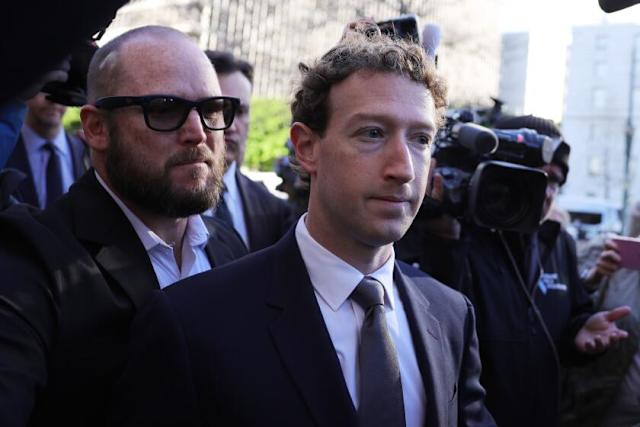
The Pentagon is enriching the pockets of the tech billionaire owners of AI companies. While the Department of Defense/War has broken its contract with the company Anthropic, other AI companies are signing large contracts, such as Open AI and Palantir.
The Illusion of Global Data Privacy Standards (Technology Policy Brief #165)
A single, binding global data privacy standard does not yet exist. Instead, governments and companies operate under regional systems with different priorities.
36 States Move to Block Federal Preemption of AI Laws, Setting Up Major Court Fight (Technology Brief #164)
On November 25, 2025, the National Association of Attorneys General, led by Connecticut Attorney General William Tong, sent a letter on behalf of a bipartisan coalition of 36 state attorneys general to Congress. The letter urged Congress leaders to reject the proposed ban on state-level artificial intelligence (AI) laws. The attorneys general argue that a broad federal law would prevent individual states from addressing and responding to AI risks quickly.

Environment
Environment
The First Global Rules for Carbon Removal Credits Are Being Written Right Now (Environment Policy Brief #191)
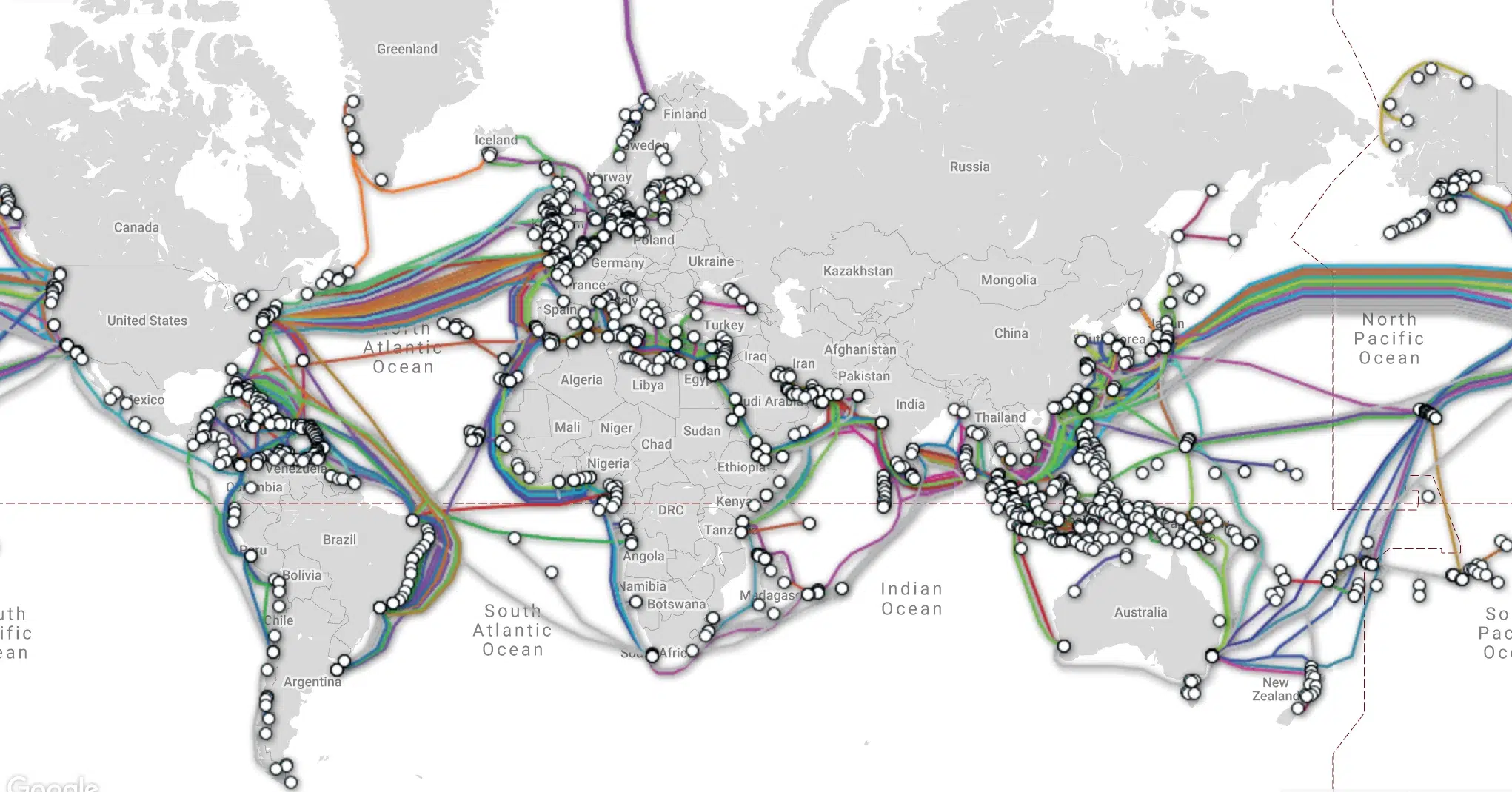
Governments and climate regulators are currently trying to determine how engineered carbon removal technologies should qualify for international carbon credit markets. Currently, the International Organization for Standardization (ISO) is developing and updating the technical standards to align with GHG reporting and climate management. The publication of the revised ISO 14001:2026 standard is planned for April 2026 with a transition period of three years.
Blue States Initiate Legal Pushback After Administration Overturns Endangerment Finding (Environment Policy Brief #190)
Federal climate regulation is at risk as the U.S. Environmental Protection Agency (EPA) rescinded the 2009 “endangerment finding” on February 12, 2026. The EPA called the engagement finding “the single largest deregulatory action in U.S. history.” States like California and Wisconsin, as well as several organizations, are preparing for a legal battle that could eventually reach the Supreme Court, which could take years. They argue that the U.S. could be left with far less ability to regulate emissions at a national level.
Dangers lurk as Zeldin repeals EPA’s endangerment finding (Environment Policy Brief #189)
Scientists first suspected a link between greenhouse gases and climate in the mid-19th century. Swedish scientist Svante Arrhenius won the Nobel Prize in chemistry with calculations in 1897 that linked burning coal to global warming. From that time onwards, scientists took up studying this linkage with better tools, more resources, and coordination.

Education
Mindy Spatt

Antisemitism Is the Weapon, Teachers are the Target (Education Policy Brief #213)
Charlie Sweeney
Trump’s War on Highest Ed: Shake-up or Shakedown? (Education Policy Brief #212)
Charlie Sweeney

How the Trump Administration Shook Up Education — and What It Means for Students with Disabilities (Education Policy Brief #211)
Nicholas Gordon
Trump’s Termination of U.S. Exchange Programs Weakens America at Home and Abroad
Katie Lever
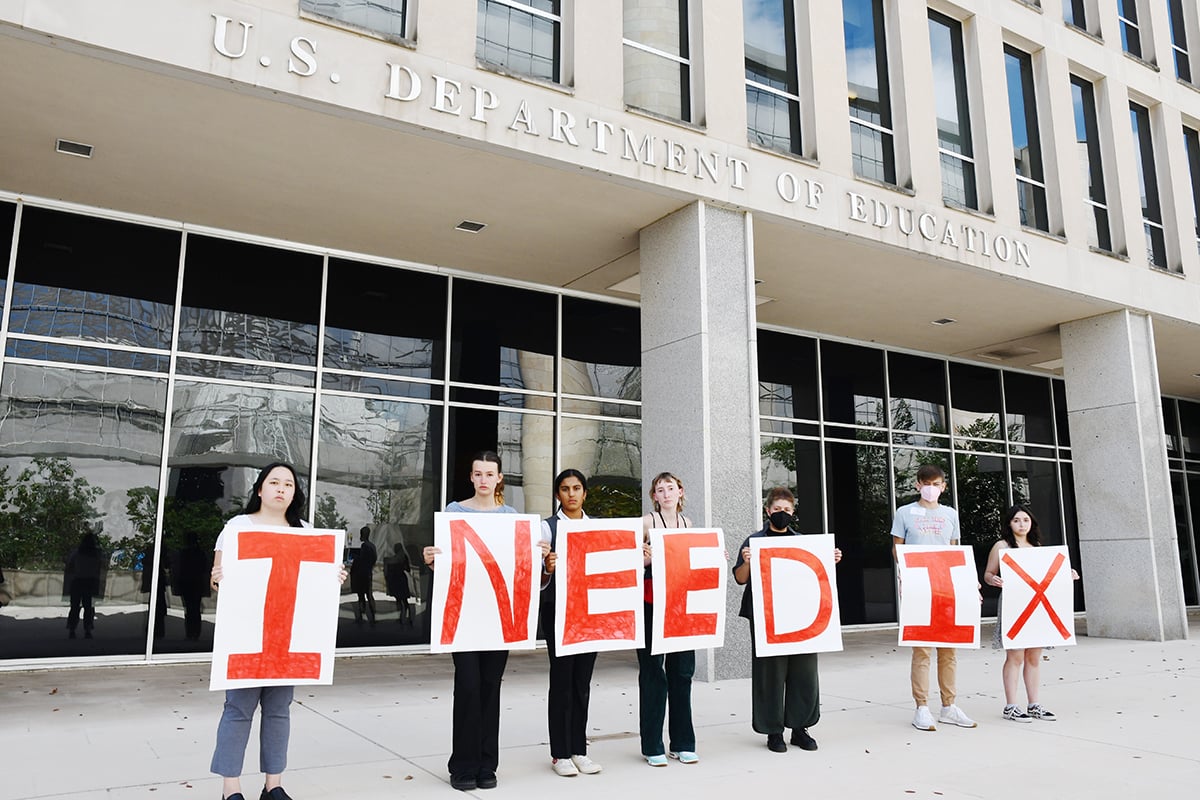
The Uncertain Future of the Department of Education and Title IX (Education Policy Brief #209)
Steve Piazza

The Downsizing of Student Learning Assessments (Education Policy Brief #208)
Yelena Korshunov

New Trump Rule Targets The Head Start Program (Education Policy Brief #206)
Steve Piazza

Current Efforts to Change State Education Curricula (Education Policy Brief #205)
Steve Piazza

Project 2025 and Federal Influence Over K-12 Curricula (Education Policy Brief #204)
Naja Barnes

The Future of Student Loans in Trump’s Presidency (Education Policy Brief #203)
Valerie Henderson

The Trump Administration and the University Communities: Part 1, Funding Suspension
Valerie Henderson

The Trump Administration and University Communities: Part II
Valerie Henderson

Understanding What the U.S. Department of Education Did
Damian DeSola

MAGA Against College: A Fight for America’s Minds
Valerie Henderson

The Reasons We’ve Had a Department of Education

Health & Gender
Health & Gender
New U.S. Dietary Guidelines Signal Shift on Processed Foods, Meat and Dairy (Health & Gender Policy Brief #184)
On January 7, 2026, the U.S. federal government released the 2025–2030 Dietary Guidelines for Americans. These new guidelines show a shift in how U.S. health officials define healthy eating andaddress processed foods, protein consumption and dairy. The Guidelines were issued by the Department of Health and Human Services (HHS) and the Department of Agriculture (USDA). They are set to shape federal nutrition policy, school meal standards and how public health is messaged for the next five years.
Impacts of the Expiration of the Affordable Care Act
The Affordable Care Act (ACA) (also known as Obamacare) was signed into law by President Obama on March 23, 2010. The ACA aimed to make healthcare more affordable to more people, expand Medicaid to individuals with incomes below 138% of the federal poverty level, and for private health insurance, prohibit insurers from denying coverage due to preexisting health conditions and from denying coverage to people.
The Challenges to Federal Vaccination Policy (Health & Gender Policy Brief #182)
The Protecting Free Vaccines Act (H.R. 5448) aims to preserve stable vaccine coverage by freezing ACIP recommendations as of 2024 and requiring all major insurance programs to continue covering those vaccines without cost-sharing until 2030. H.R. 5448 was introduced on Sept. 18, 2025, by Rep. Frank Pallone D-NJ-6. Since this is a Democrat-sponsored bill in a Republican-controlled House, its chances of passing are currently low unless bipartisan support grows.

Immigration
Immigration

Law and Order or Overreach? When Soldiers Become Police (Immigration Policy Brief #191)
As summer draws to an end, President Trump is once again utilizing federal military forces for law enforcement, this time in the nation’s capital. In California, Trump cited immigration protests for the use of the National Guard & ultimately the deployment of U.S. Marines. Now we see the President citing crime & the inability of D.C. Democrats to stop it. President Trump’s coast-to-coast use of federal military force in Los Angeles and Washington, D.C. during 2025 highlights the growing tensions between public safety, constitutional boundaries, and presidential power, raising critical questions about the future of American democracy and civil-military relations.
Quantity Over Justice: The Coming ICE Expansion (Immigration Policy Brief #190)
If you have been following the news surrounding Trump’s so-called “Big Beautiful Bill,” one of the provisions you would see is the $170 billion for immigration enforcement & border security. Of this $170 billion, approximately $75 billion represents an increase in funding to ICE, making it the highest-funded law enforcement branch of the federal government. The funding for ICE is intended to build more detention centers, aid in retention through bonuses, & expand the total number of personnel.
It Is Not an Invasion: How Undocumented People Got Here, Where They Live, & Why They Stay (Immigration Policy Brief #145)
According to estimates from Pew & the American Community Survey, there are between 10.5 & 11 million undocumented people living in the United States. For perspective, that’s fewer—by about 2 million—than the population of the L.A. metro area. On the one hand, that’s a large number; on the other, it’s far from an invasion in a country of 340 million people.

Economic Policy
Economic Policy

A Primer on Commodity Metals (Economic Policy Brief #90)
Commodity metals are raw metals that are globally standardized and traded in bulk. They are typically categorized as industrial (base) metals (copper, aluminum, zinc), or precious metals (gold, silver, platinum). Precious metals are valued for investment and jewelry, while base metals are essential for industrial use and manufacturing. This Brief seeks to explain the ways in which fluctuations in demand influence the pricing and availability of commodity metals. In addition to commodity metals, rare earth minerals play an important role in various technologies but are not globally standardized. We will discuss these in an upcoming brief.
How Elon Stays in Business (Economic Policy Brief #89)
Elon Musk’s corporate empire—Tesla, SpaceX/Starlink, X, Neuralink and the Boring Company—has become a single, privately steered ecosystem whose combined annual revenues now rival the GDP of a midsize nation.
No Capital Gains Tax in Texas: What It Means for Businesses and Residents (Economic Policy Brief #88)
In 2025, the Texas Legislature passed House Joint Resolution 6 (HJR 6), placing a proposed constitutional amendment on the ballot for the November 4, 2025, election. If approved by voters, the amendment would permanently prohibit Texas from ever imposing a tax on individuals’ net capital gains.
Making Democracy Great Again
"*" indicates required fields