
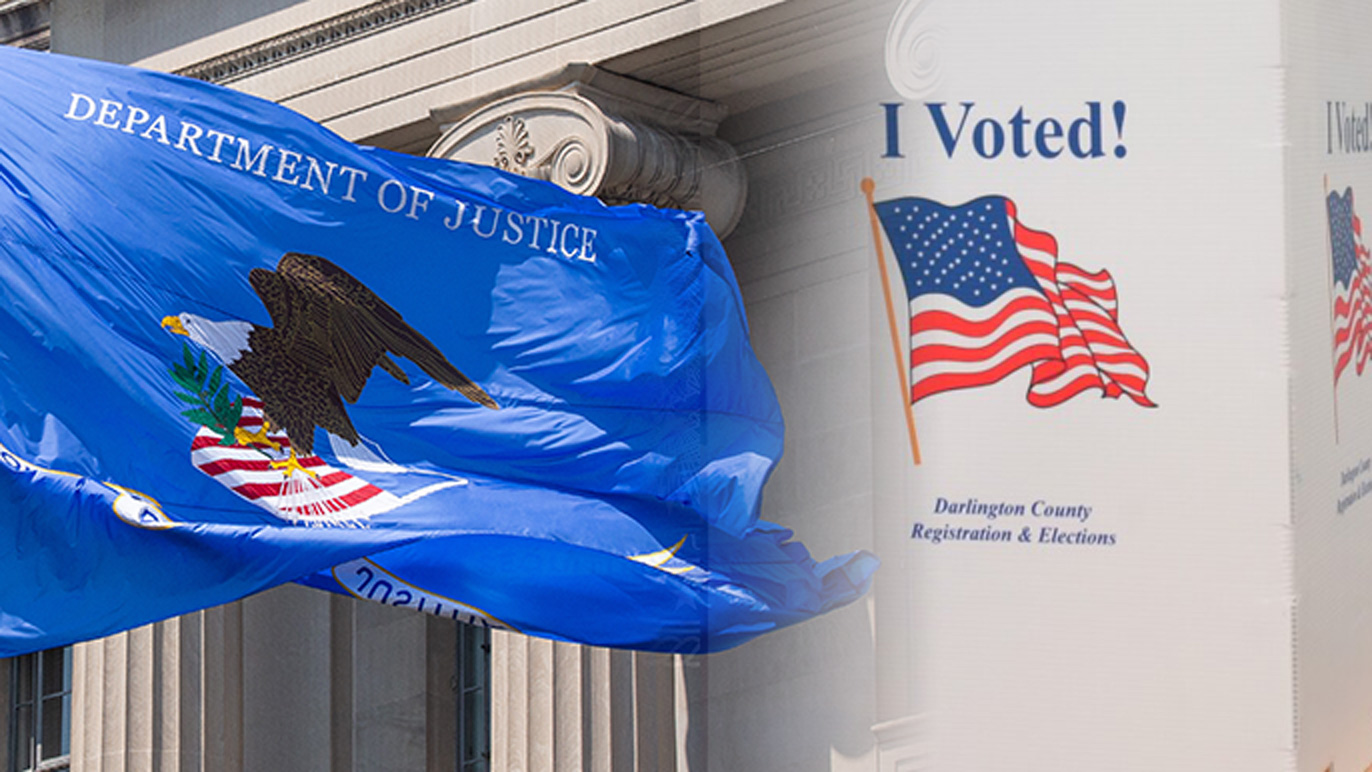
Policy Summary: Starting in May 2025, the Department of Justice (DOJ) proceeded to request from nearly every state and the District of Columbia (D.C.) access to each state’s un – redacted and complete voter rolls. Each state’s voter rolls contain the list of every registered voter in the state. Additionally, these lists also contain additional data, such as personally identifiable information (PII) including telephone numbers, home addresses and social security numbers, some complete and some with only the last four numbers. The Trump administration has not offered a coherent rationale for their demands although it is well – known that President Trump has put forth disproven election – rigging conspiracy theories. Months after the DOJ made their requests to the states ,Attorney General Pam Bondi informedMinnesota Governor Tim Walz that a condition of restoring order in his state as a result of ICE protests would be to turn over Minnesota’s voter rolls.
The response to these requests has been mixed and not along party lines. Arizona, Georgia, New Hampshire and Washington have flatly refused to provide any voter data to the DOJ. Colorado, Pennsylvania, Utah and a number of other states directed DOJ to publicly available lists instead ofdirectly providing the information to DOJ. Ten states, including Alaska and Texas, complied and provided their voter rolls to the department. Three lawsuits were filed in three separate states regardingthese requests and in all three instances a federal court sided with the state and prohibited the DOJrequest in the state. The case in Oregon was dismissed. The case in California was also dismissedbecause of concerns about federal overreach. And in Michigan the case was dismissed with the judge calling the DOJ request in violation of two federal statutes and inconsistent with numerous prior cases.Because many states have refused to hand over the voter rolls, the DOJ has sued twenty – four (24) states to try and gain access with many of the lawsuits ongoing. Additionally, in six of those states the state election offices are led by a Republican official. LEARN MORE
Policy Analysis: Why are the Trump Administration and the DOJ so insistent on having access to state voter rolls?
The United States Constitution gives authority for the time,place and manner for conducting elections tothe states. This includes choosing the places and times of elections and the maintenance of voter rolls. The Federal Government has a limited role with the executive branch having nearly no say in how state elections are run. Historically when the Federal Government has become involved in voting by passing federal laws, it has been to protect access to the ballot box (Voting Rights Acts of 1965) and to providesimplified procedures that all states follow (Help America Vote Act) to reduce errors that could occur due to the number of states. The key point here is that when the Federal Government gets involved, it is usually through Congress passing a law and not through unilateral executive branch action as appears to be the case with these Trump DOJ requests for access to a state’s voting rolls.
The problem with the DOJ requests for this information is that it appears to be for the purpose of undermining the upcoming 2026 midterm elections as well as future elections. The Brennan Center for Justice released a report of the “confidential memorandum of understanding” that DOJ required each state to sign when handing over their voter roll information. These proposed agreements explain what the Trump Administration and DOJ intend to do with the info. DOJ intends to review the voter rolls, identify voters that need to be removed from the rolls and instruct the state to remove the identified voters within forty – five days. The problem with this is there are no standards for how DOJ will conduct their review and identify which voters need to be removed. Not only that but the request to remove the identified voters within forty – five days conflicts with the National Voter Registration Act. That act requires notice being sent to a voter and if no response is received for the state to wait two election cycles before removing the voter. That process is significantly longer than the forty – five days demanded by DOJ in these confidential agreements. And another issue is that once the government isgiven access to these voter rolls there is no guarantee the info will be kept confidential. The greatest fearis that the information will be shared with Immigration and Customs Enforcement (ICE) officials and be used for other immigration and citizenship purposes. It is these motivations that have public officials on both sides of the aisle concerned about sharing sensitive voter data with DOJ and the Trump Administration. These efforts are also castng a shadow over the upcoming 2026 midterm elections as many fear that the Trump Administration will use the info to manipulate the election and meddle in ways that will favor President Trump and the Republican Party. The midterms are still eight months away but states are pushing back against inappropriate and even illegal attempts to access a state’s voter rolls to prevent potential unwanted election interference from this Administration. LEARN MORE,LEARN MORE
Engagement Resources
- Brennan Center for Justice – a detailed analysis of the “confidential memorandum of understanding”DOJ is asking states to sign, revealing how DOJ wants to use the voter roll info once a state hands it over.
- Brennan Center Online Tracking Tool – online tracking tool showing how each state has responded to the request for a state’s voter roll from DOJ.